
Acid resistant fabric is a textile system that resists damage or chemical transfer during a specified acid exposure, with performance established by chemical-specific testing. For garment manufacturers and procurement teams, suitable protective clothing starts with a clear distinction between durable fibers, splash-repellent finishes, and tested chemical barriers.
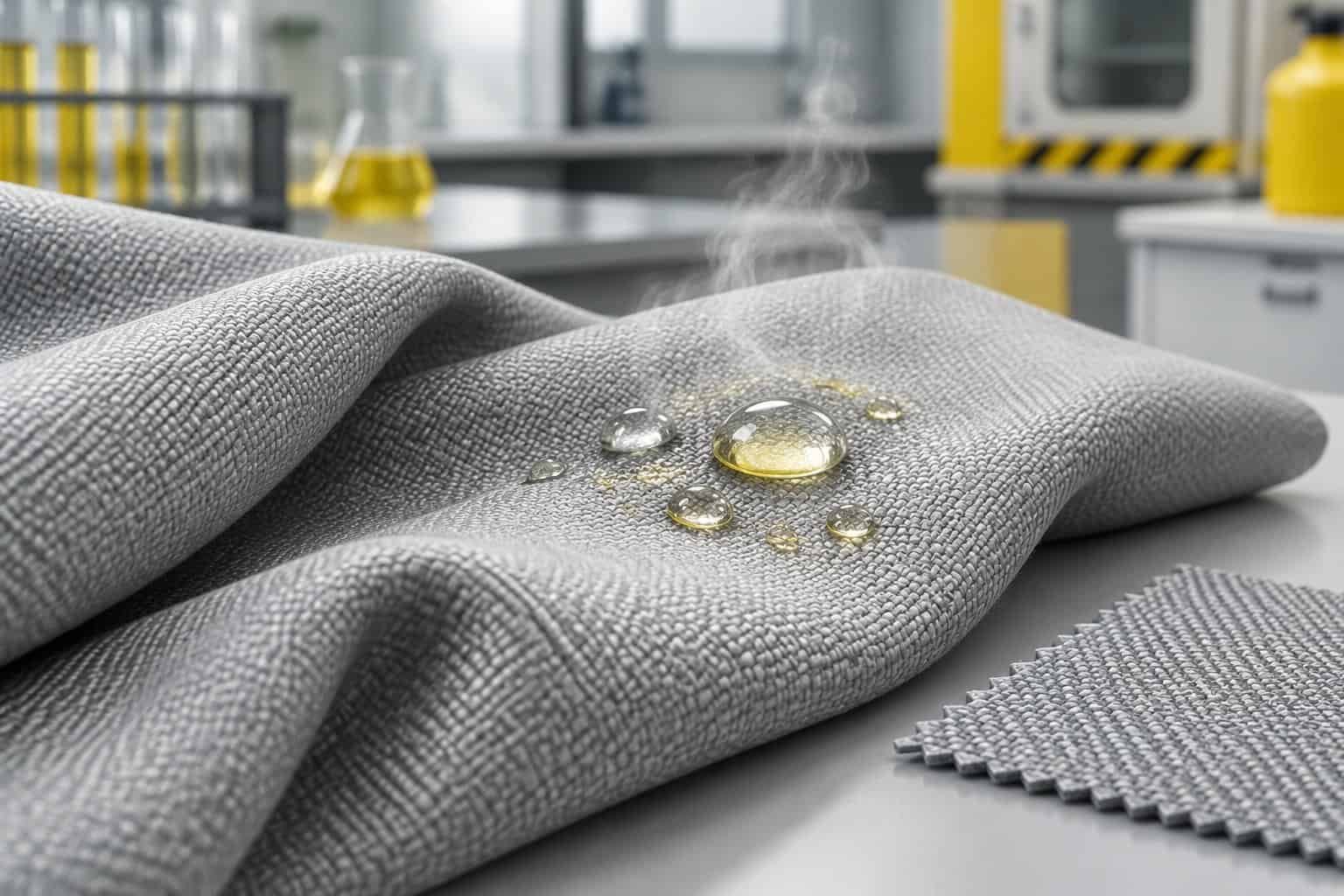
Acid-resistant fabrics support different workwear requirements. A breathable, treated woven textile serves a different purpose from a coated or laminated garment selected for sustained chemical contact. Documented performance helps buyers specify the appropriate construction while preserving the comfort and mobility required for the task.
What Does Acid Resistance Actually Mean?
Acid resistance describes performance against an identified acid under defined conditions. Chemical resistance includes the material’s response to exposure, while chemical protection also involves the garment’s coverage and construction.
Why “Acid-Proof” Is Not a Universal Guarantee
“Acid-proof” is a commercial description that requires supporting technical evidence. ASTM F1001-24 states that resistance against a specific chemical or chemical list does not establish resistance against other chemicals.
A useful specification names the challenge chemical and the measured performance. A broad product label leaves buyers without the detail needed to approve protective clothing for a particular operation.
How Chemical Type, Concentration, Temperature, and Contact Time Affect Performance
Different acids interact differently with fibers and protective layers. Oxidizing behavior, concentration, and temperature influence material damage and chemical transport.
Longer contact gives a chemical more time to penetrate openings or permeate a material. Resistance to an acid also provides no automatic evidence of alkali resistance, so mixed chemical inventories require separate evaluation.
Which Fibers Are Used in Acid-Exposure Workwear?
Polyester, polypropylene, nylon, aramids, and cotton blends appear in workwear constructions, but their functions differ. Abrasion resistance and heat resistance require separate evaluation from acid compatibility.
Polyester: Chemical-Specific Resistance and Thermal Limitations
Polyester provides dimensional stability and mechanical durability in workwear. Its resistance to acids depends on the specific chemical and exposure conditions, including whether the acid is strongly oxidizing.
Ordinary polyester is thermoplastic and softens or melts under sufficient heat. Its presence in a fabric establishes neither flame resistance nor suitability for combined chemical and thermal hazards.
Polypropylene: Chemical Compatibility and Heat Sensitivity
Polypropylene offers resistance to selected acids and appears in textile substrates and protective constructions. Strong oxidizing conditions require particular scrutiny because broad compatibility descriptions conceal important exceptions.
Its heat sensitivity limits applications involving elevated temperatures. A porous polypropylene textile also requires construction-specific evidence before it is selected for liquid chemical exposure.
Nylon: Strength Does Not Establish Acid Resistance
Nylon contributes toughness and abrasion resistance to workwear blends. Its polyamide structure is vulnerable to attack by certain acids, with severity affected by concentration and temperature.
Mechanical strength before exposure provides little information about retained strength after acid contact. Buyers need results for the finished nylon-containing construction, including its treatment and blend composition.
Aramids: Heat Performance Does Not Guarantee Chemical Protection
Aramid fibers serve applications requiring thermal performance and mechanical strength. Their response to acids varies with aramid chemistry and the exposure conditions.
A heat-resistant aramid garment still needs chemical-specific evidence for acid service. Where chemical splash and flame hazards coexist, the complete layered ensemble requires evaluation for both hazards.
Cotton and Blends: Comfort, Durability, and Treatment Requirements
Cotton supports moisture absorption and comfort, while nylon or polyester contributes additional mechanical properties in blends. Acid exposure attacks cellulose under certain conditions, so cotton’s chemical properties belong in the material assessment.
Chemical-repellent finishes reduce wetting under validated conditions. The finished construction needs testing because fiber composition alone establishes neither splash performance nor barrier protection.
How Do Ordinary Textiles, Repellent Finishes, and Barriers Differ?
Ordinary textiles provide a supporting structure, repellent finishes modify surface wetting, and continuous coatings or laminates provide a potential chemical barrier. Each mechanism requires evidence suited to its intended protective function.
Why Untreated Woven Fabrics Are Not Liquid Barriers
Woven textiles contain spaces between yarns through which liquid travels. Absorbent fibers also draw liquid into the structure, spreading contamination beyond the initial contact point.
A tighter weave changes liquid passage but does not establish a continuous barrier. Fabric weight, color, and apparent thickness provide insufficient evidence for approving chemical protective clothing.
What Post-Treated Chemical-Repellent Fabrics Can and Cannot Do
Post-treated chemical-repellent fabrics reduce wetting and encourage specified liquids to run off under tested conditions. These fabric finishes act at the textile surface while retaining the underlying woven construction.
Levitex supplies post-treated chemical-repellent cotton, cotton/nylon (C/N), and cotton/polyester (CVC) fabrics. These products require assessment as repellent textiles; their performance is not equivalent to barrier-based chemical-resistant materials.
When Coated or Laminated Barrier Materials Are Needed
Coated or laminated materials warrant evaluation when the hazard assessment requires control of liquid transfer beyond demonstrated repellency. Potential constructions include polymer-coated textiles and multilayer films supported by fabric.
The coating chemistry and its integrity determine compatibility with the challenge chemical. The distinction between waterproofness, resistance, and repellency also helps clarify why surface beading alone provides insufficient evidence of chemical barrier performance.
What Do Chemical Protection Tests Actually Measure?
Chemical protection tests measure different routes of transfer and different forms of material damage. Penetration, permeation, and degradation results answer separate questions about chemical resistance.
Penetration: Liquid Passing Through Openings and Seams
Penetration is bulk liquid movement through pores, holes, seams, or other discontinuities. A fabric specimen and a stitched assembly present different potential leakage paths.
ASTM F903 evaluates resistance to liquid penetration, including challenges applied under specified pressure conditions. Testing laboratories use this method for visual assessment of liquid penetration, so the report needs to identify the specimen and test conditions.
Permeation: Chemical Movement Through the Material
Permeation involves chemical molecules moving through a material, even when its surface remains intact. ISO 6529:2026 measures cumulative permeation, permeation rate, and breakthrough time under continuous contact.
These measurements require careful interpretation of the chemical, temperature, and reporting criteria. A reported breakthrough time is a laboratory result, not an automatic safe wearing period.
Degradation: Changes in Material Properties After Exposure
Degradation describes physical or chemical deterioration following exposure. Observable changes include swelling, cracking, softening, and embrittlement.
Strength loss also requires attention because a material might retain an acceptable appearance while losing mechanical performance. The relevant evaluation should address properties needed during use, such as tear strength or coating adhesion.
Why Repellency Results Cannot Substitute for Barrier Evidence
Repellency testing measures how a specified liquid behaves on a material under a defined procedure. For example, ISO 6530 evaluates liquid repellency alongside penetration through a gutter-style test arrangement.
A high runoff result provides information about that exposure and procedure. Permeation evidence requires molecular transport measurements, so repellency percentages alone leave that question unanswered.
How Should Buyers Select Fabric and Verify Supplier Claims?
Buyers should connect a task-based hazard assessment with traceable reports for the exact fabric and garment construction. Chemical processing and laboratories require exposure-specific decisions, including any simultaneous mechanical or thermal hazards.
Define Exposure Conditions in Chemical Processing and Laboratories
A written exposure specification establishes the basis for material selection. It should record:
- Chemical identity and mixture composition
- Concentration range and operating temperature
- Splash, spray, surface contact, immersion, or vapor exposure
- Expected contact duration and frequency
- Pressure or mechanical loading
- Body areas exposed and emergency procedures
The safety data sheet informs the assessment, while process details establish the credible contact conditions. Laboratory work and bulk chemical transfer deserve separate specifications when their exposure patterns differ.
Match Fabric, Seams, Closures, and Garment Design to the Hazard
Protective clothing needs coverage that remains effective during bending, reaching, and kneeling. Sleeve interfaces, zipper areas, pockets, and trouser-to-boot junctions deserve inspection because they create possible entry or collection points.
The selected chemical protective clothing level must align with the task assessment and the full ensemble. Fabric-level evidence leaves garment fit, closure performance, and interfaces to be evaluated separately.
Request Chemical-Specific Reports for the Exact Fabric and Finish
A useful report identifies the tested article closely enough to connect it with the purchase order. Procurement teams should check:
- Fabric code, composition, weight, and construction
- Finish, coating, or laminate identification
- Challenge chemical and concentration
- Test method and edition
- Test temperature, duration, and pressure where applicable
- Individual results and reporting limits
- Pretreatment or laundering conditions
- Laboratory identification and report date
Supplier category descriptions, including chemical-resistant fabric manufacturing in China, provide purchasing context. Product approval still requires documentation tied to the supplied material.
Confirm Laundering Conditions and Any Required Multifunctional Performance
The approval specification should identify how the garment will be cleaned and which performance claims must survive that process. Abrasion resistance, heat resistance, flame resistance, and electrostatic properties each need appropriate evidence.
A combined finish package requires evaluation in its finished state. Where flame resistance is required, FR fabric quality control should accompany chemical-performance checks so that neither requirement disappears from production acceptance criteria.
How Do Washing and Wear Affect Protection?
Washing and wear alter surface finishes and place mechanical stress on protective clothing. Continued use requires validated care instructions, documented inspection, and replacement criteria appropriate to the material.
Follow Validated Laundering and Finish-Care Instructions
Care instructions should specify permitted detergents, wash temperature, drying conditions, and any restrictions on additives. Certain finishes require controlled heat treatment to restore performance, but that procedure needs explicit manufacturer authorization.
Multifunctional workwear also requires attention to flame-resistant fabric laundering when thermal protection is part of the specification. A cleaning process acceptable for one property might damage another finish or garment component.
Inspect for Damage and Assess Finish Durability
Inspection should cover worn areas, open seams, damaged closures, and changes to coatings or laminates. Knees, elbows, cuffs, and pocket edges deserve attention because repeated contact concentrates wear in those areas.
Chemical-repellent fabrics also require a finish-durability assessment consistent with the supplier’s instructions. A water-droplet demonstration provides no substitute for testing against the specified chemical after the required laundering and wear conditioning.
Use Manufacturer Guidance for Contamination and Replacement Decisions
Contaminated garments need a defined removal, handling, and disposal or decontamination procedure. Personnel should follow the workplace emergency plan and prevent secondary exposure during doffing.
Reuse requires manufacturer-supported cleaning and acceptance criteria for the chemical involved. Uncontrolled home washing risks spreading contamination, and an apparently clean surface provides insufficient evidence that absorbed chemicals have been removed.
Choose Workwear Fabric by Exposure and Verified Performance
Acid-resistant fabrics should be selected through documented exposure conditions and verified performance of the finished protective system. Fiber compatibility supports material selection, while repellency and barrier tests establish different aspects of chemical protection.
Approval should include the fabric, garment construction, and validated care conditions. Replacement decisions should follow contamination guidance and the durability limits established for the selected product.
Garment manufacturers and procurement teams seeking post-treated chemical-repellent cotton, C/N, or CVC fabrics can contact Charlie Luo at Charlie@levitex.com to discuss their requirements and request relevant technical documentation. The discussion should identify the intended chemicals and exposure conditions without assuming barrier chemical resistance or a specific PPE level.
Frequently Asked Questions
Chemical-specific evidence provides the basis for answering common questions about protective clothing materials. The following answers distinguish fiber properties from finished-garment chemical resistance.
What clothing material is most resistant to acid?
Specialized chemical-barrier laminates and compatible polymer-coated fabrics are candidates for demanding acid exposures. Selection requires test results for the exact acid, concentration, temperature, and contact conditions; no material designation establishes universal protection.
Is polyester resistant to acid?
Polyester resists selected acids under defined conditions, but its performance changes with chemical type and exposure severity. Ordinary polyester fabric provides no automatic liquid barrier and requires separate evaluation wherever heat or flame hazards exist.
Is nylon resistant to acid?
Nylon has limited compatibility with certain acids because its polyamide structure is susceptible to chemical attack. A nylon-containing workwear fabric needs chemical-specific testing, including evidence for its blend and finish.
What fabric should battery acid-resistant pants or coveralls use?
Battery-acid pants or coveralls should use a finished construction with documented resistance to sulfuric acid at the concentration and exposure conditions identified in the task assessment. Seams, closures, and boot interfaces require evaluation alongside the fabric, and splash-repellency results alone provide insufficient evidence for sustained contact.
Where can I buy chemical-repellent workwear fabric?
Levitex supplies post-treated chemical-repellent cotton, C/N, and CVC workwear fabrics. Garment manufacturers and procurement teams can request relevant technical documentation from Charlie Luo at Charlie@levitex.com, specifying the intended exposure and laundering requirements.