
Twill suits industrial workwear that needs flexible drape during repeated movement; plain-woven canvas suits applications that need a firmer fabric body and structured pockets or panels. In a twill vs canvas comparison, neither construction earns a universal durability advantage: comparable finished fabrics need separate abrasion and tear evaluations.
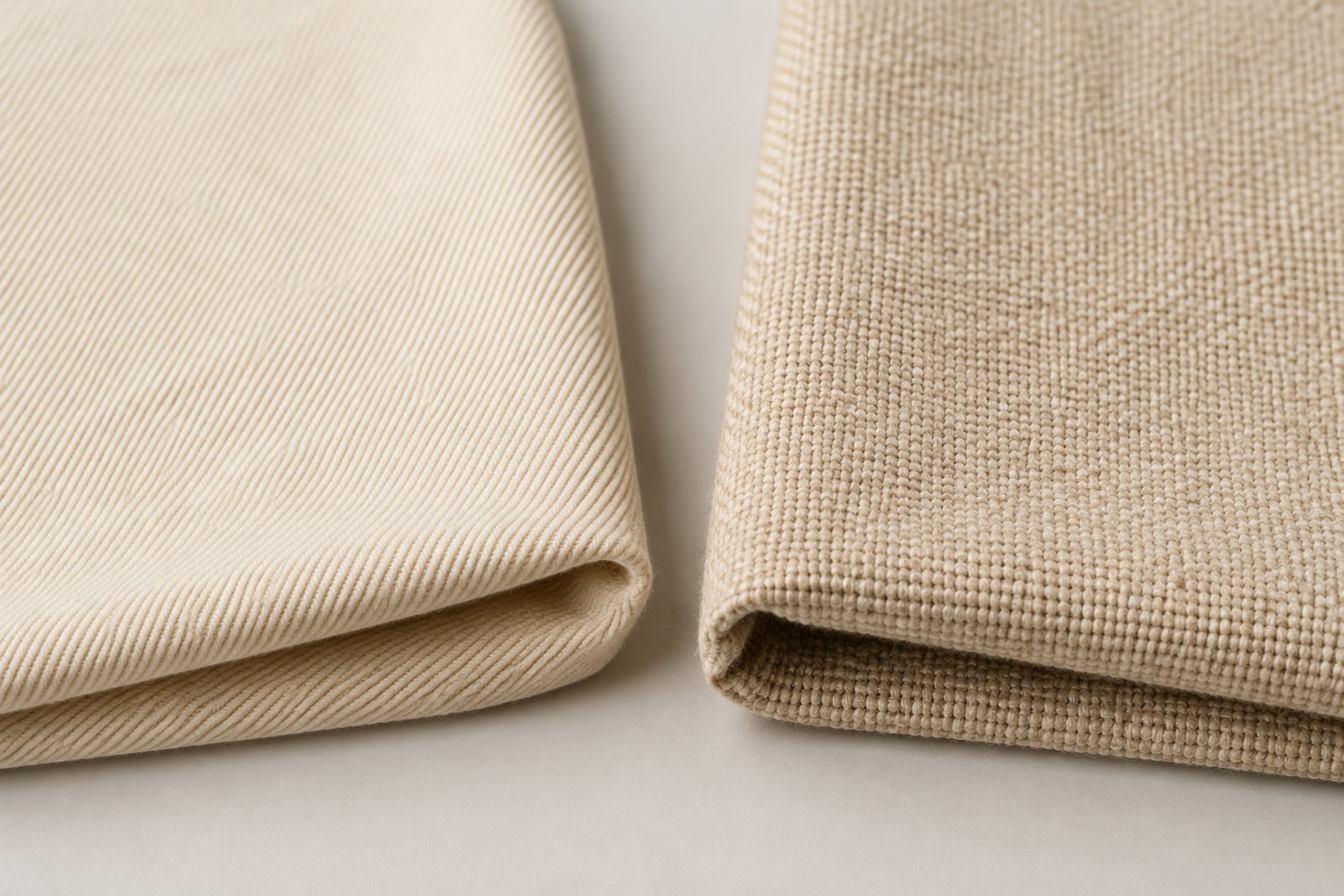
For textile buyers, the useful comparison starts with matched fiber composition and fabric weight. A heavy canvas and a lightweight twill reveal little about the effect of weave alone, especially after different finishing treatments.
Levitex has manufactured textiles since 1951 and supplies fabrics for industrial and protective-workwear applications. Its manufacturing perspective keeps fabric selection focused on the finished cloth, its intended service conditions, and product-specific evidence.
How Does Weave Construction Change the Fabric?
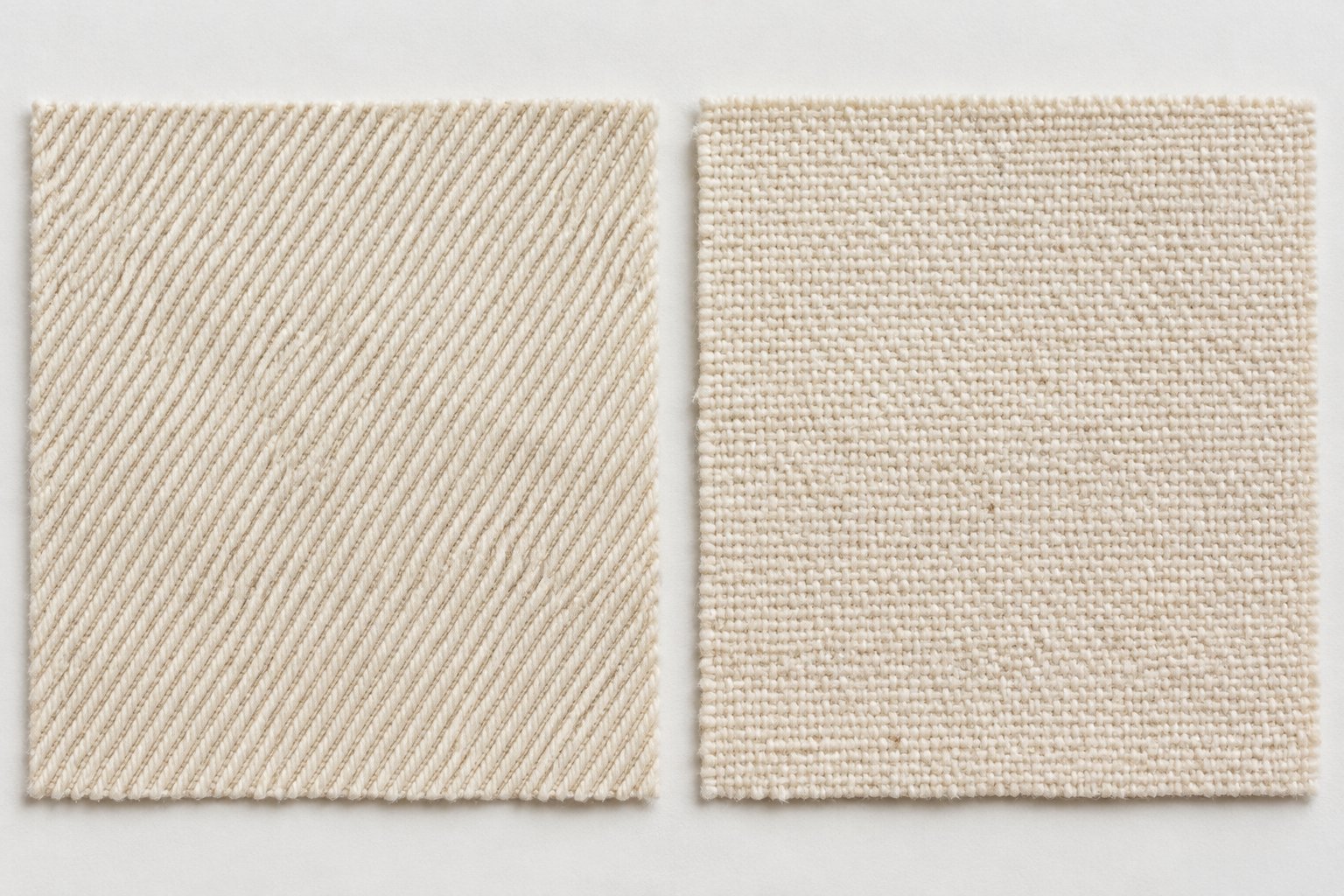
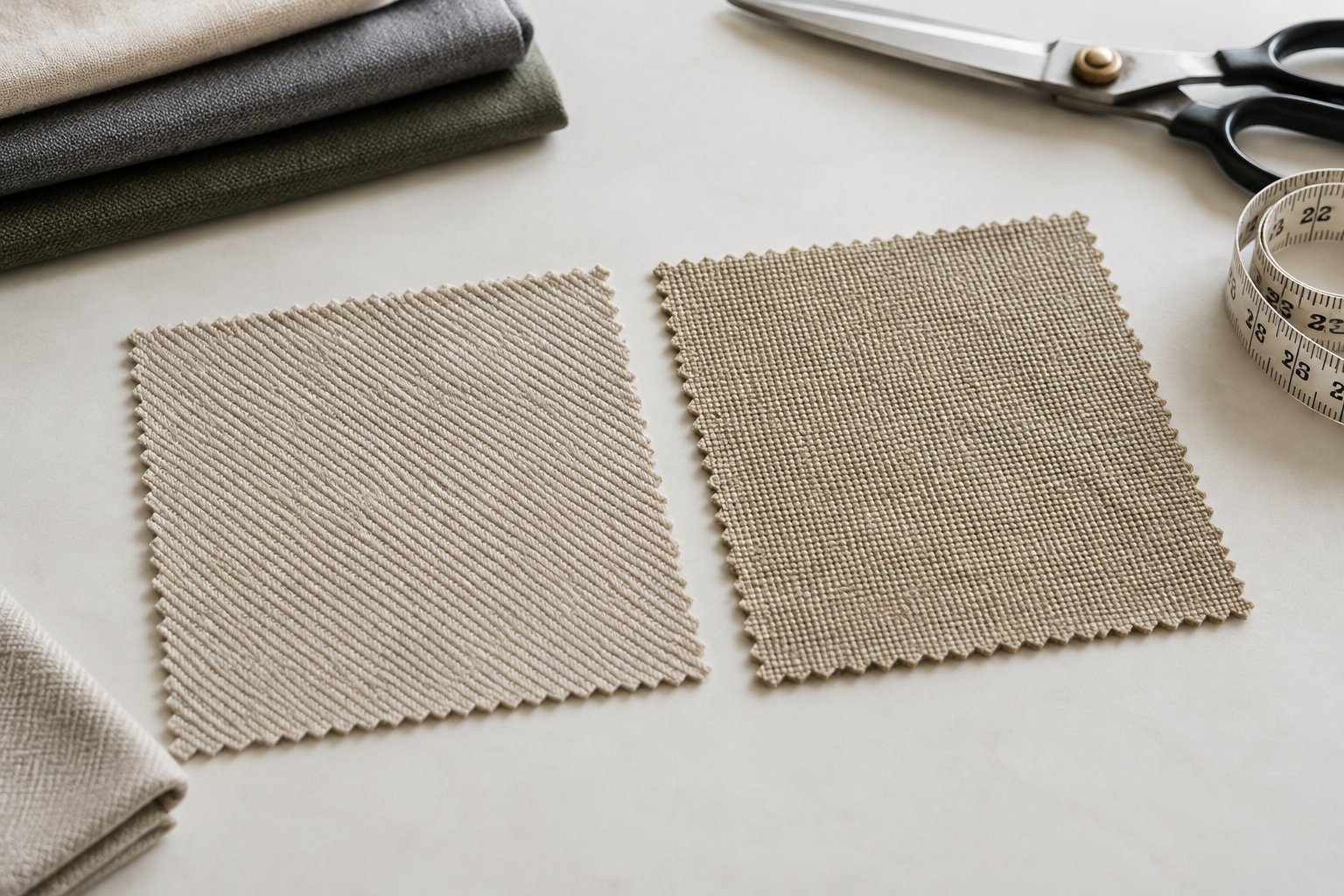
Weave construction changes how yarns interlace, influencing surface texture and freedom of yarn movement. Twill construction produces diagonal lines, while plain-weave canvas has frequent over-under interlacings that contribute to its body.
How Twill Construction Creates a Diagonal Surface
A twill weave staggers its interlacing points across successive yarns, creating a diagonal weave pattern. Common constructions include 2/1 and 3/1 twills, whose repeats place yarns over multiple opposing yarns before interlacing again.
Those longer exposed yarn sections are called floats. Their arrangement gives twill its diagonal surface and influences bending behavior, with fewer interlacings allowing greater yarn movement under otherwise comparable conditions.
Cotton twill identifies both a fiber and a construction. The diagonal weave itself also accommodates other compositions, so “twill” alone establishes neither cotton content nor protective performance. Yarn thickness adds another variable: yarn count and fabric weight describe different characteristics, and both belong in a meaningful construction specification.
How Plain-Woven Canvas and Cotton Duck Are Constructed
Plain-woven canvas uses an alternating over-one, under-one interlacing pattern. Substantial yarns and a close construction give industrial canvas its characteristic firmness, although lighter and softened versions also exist.
Duck canvas is a closely woven canvas category commonly associated with workwear. Cotton duck includes different yarn arrangements and weights; the name alone does not establish a fixed double-yarn construction.
Cotton canvas and cotton twill are both cotton fabric when their composition is entirely cotton. Their structural difference remains the interlacing pattern. For purchasing, the supplier’s construction line should identify the yarn specification and thread density alongside the commercial fabric name.
How Do Comparable Weights Perform in Service?
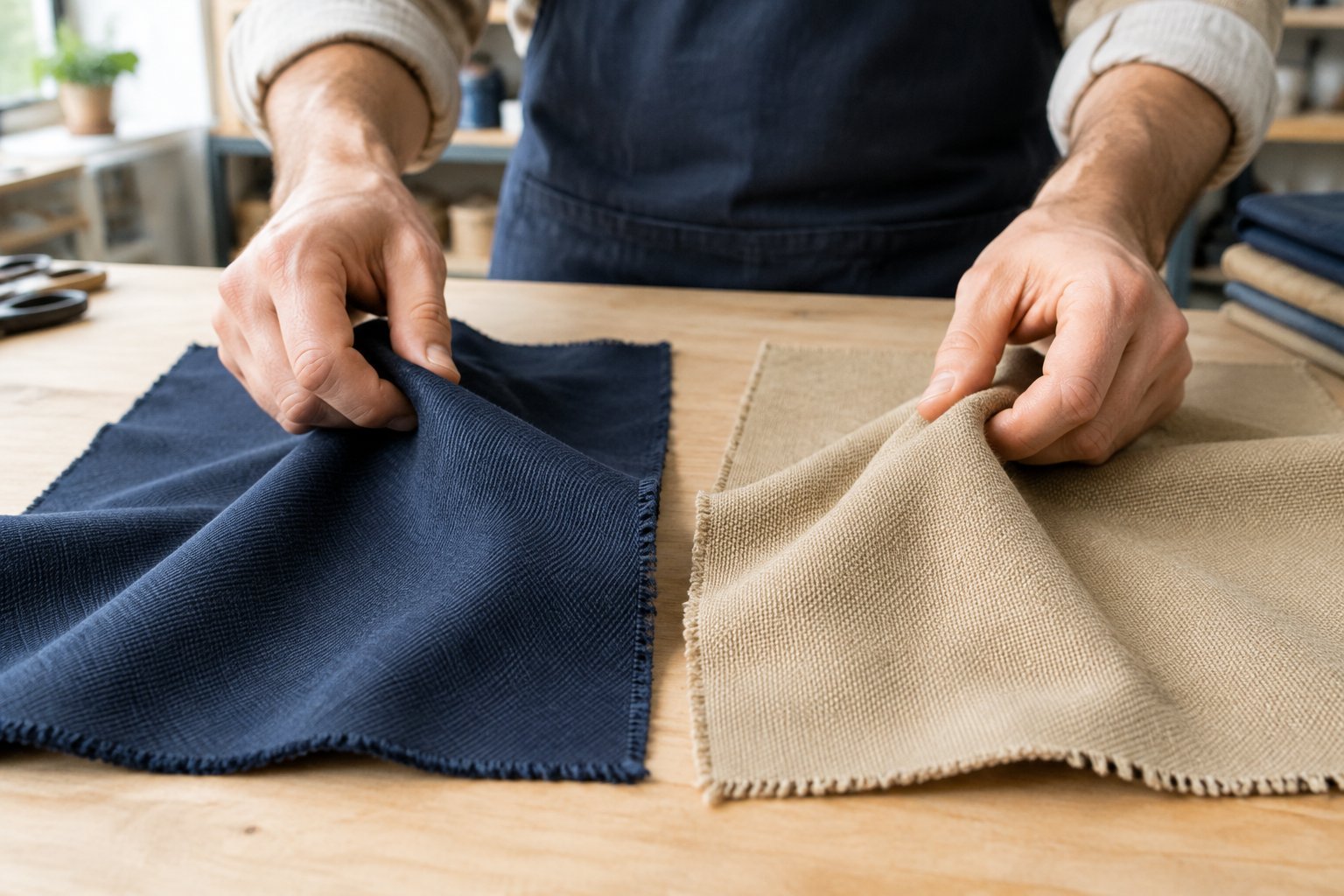
Comparable weights make service comparisons more useful, but fiber quality and finishing still influence the result. Fabric weight should refer to finished mass per unit area, expressed in gsm or oz/yd².
For US purchasing, 1 oz/yd² equals approximately 33.91 gsm. A fabric weight chart helps align units before buyers compare construction or price.
| Comparison point | Twill | Plain-woven canvas |
|---|---|---|
| Weave structure | Staggered interlacings | Alternating interlacings |
| Surface | Diagonal ribs | Grid-like texture |
| Drape tendency | More yielding | More structured |
| Abrasion ranking | Test required | Test required |
| Tear ranking | Test required | Test required |
| Water resistance | Finish-dependent | Finish-dependent |
Abrasion and Tear Resistance: Why Neither Weave Always Wins
Abrasion resistance describes behavior under repeated rubbing. Tear resistance describes the force needed to propagate an existing cut or tear, so the two results answer different service questions.
Twill’s floats expose longer yarn sections to contact while also permitting yarn movement under load. Canvas has more frequent interlacings that restrain yarn movement. The resulting resistance to wear depends on yarn strength, construction density, and the finished surface.
For knees and seat panels, abrasion evidence addresses repeated surface contact. Around damaged pocket corners, fabric tear strength becomes especially relevant. Buyers should compare results obtained with the same method, specimen direction, and conditioning, including any agreed laundering pretreatment.
A breaking-force result answers a separate question. Strong resistance to a straight pulling load does not establish how an existing cut will spread.
Feel, Drape and Wrinkle Resistance Under Repeated Movement
At comparable specifications, twill often feels more yielding during bending because its interlacing arrangement allows yarns greater freedom to move. That characteristic supports trousers worn during kneeling or frequent climbing.
Canvas offers a firmer hand when its substantial yarns and close set maintain body. That firmness helps pockets retain their shape, although thick folded areas increase bulk at seams and waistbands.
Wrinkle resistance also reflects fiber recovery and finishing chemistry. Cotton in either construction develops creases, and the diagonal surface of twill sometimes makes those creases less visually prominent. Approved fabric finishes should therefore remain consistent across comparison samples.
Breathability and Water Resistance Depend on More Than Weave
Airflow follows the open pathways between yarns, so density and finishing influence breathability directly. A closely set twill is capable of restricting airflow more than an open canvas of comparable weight.
Water resistance requires similarly precise language. Surface beading, resistance to wetting, and resistance to water penetration describe different behaviors; waterproof, water-resistant, and water-repellent fabrics require different evidence.
Waxed canvas gains water resistance from its applied wax treatment, with associated changes in hand and moisture transfer. Wax also changes the material’s burning behavior. Protective-workwear programs require approval of the complete finished cloth before any additional treatment enters production.
Which Construction Suits Your Industrial Application?
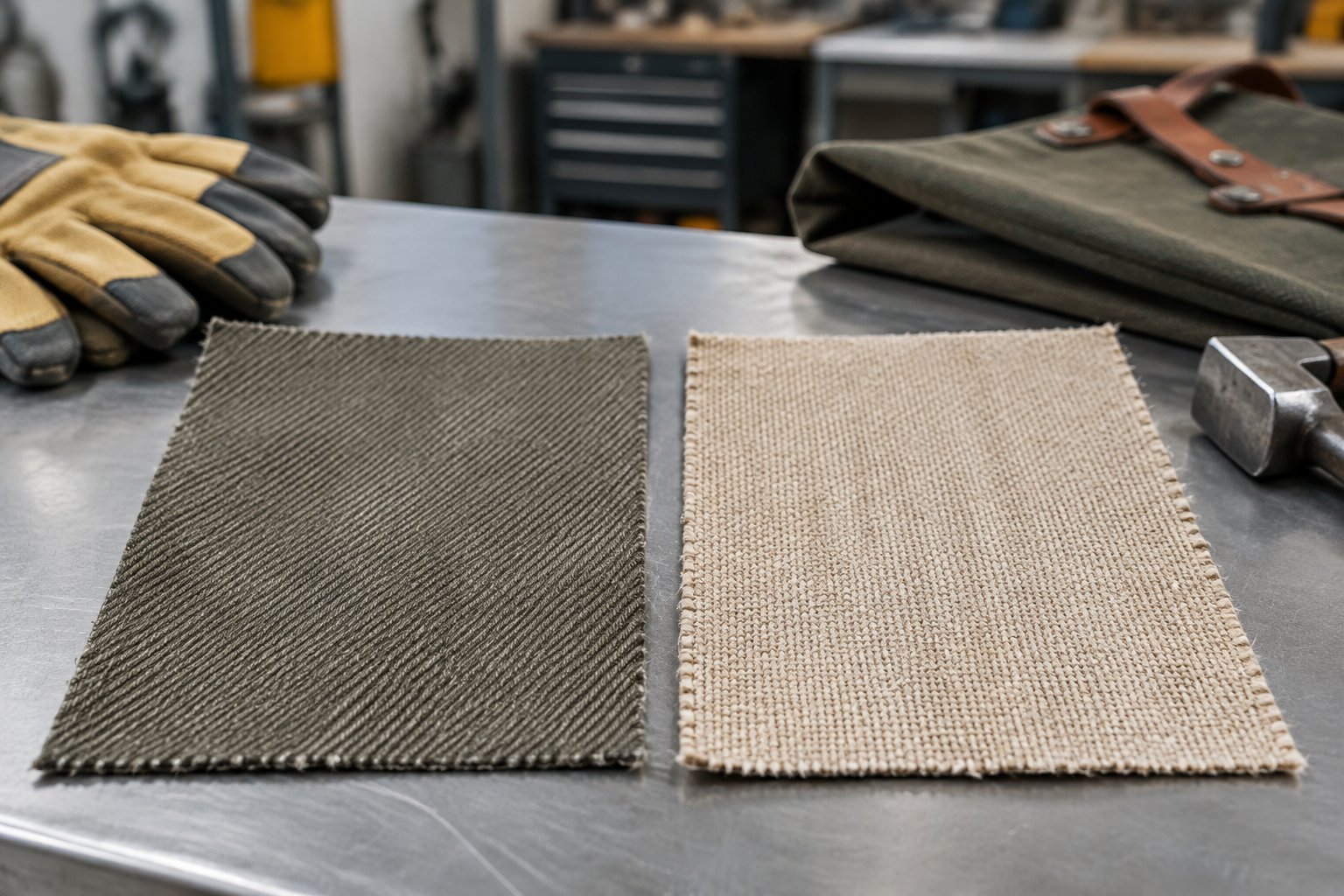
Twill provides a practical starting point for movement-intensive industrial apparel, while canvas provides a useful starting point for structured, high-contact components. Final approval belongs to the particular fabric and the external garment requirements for the job.
Utility Pants and Cargo Pants: Balancing Movement and Structure
Twill fabric suits utility pants when repeated bending makes pliability a purchasing priority. Maintenance trousers and industrial cargo pants benefit from cloth that folds comfortably behind the knees without excessive bulk.
Canvas cargo pants suit programs seeking a firmer body through the legs and pockets. The pocket assembly still requires assessment under its intended load because fabric stiffness alone establishes neither seam strength nor pocket durability.
A useful development comparison includes finished-fabric samples followed by garment trials conducted by the apparel manufacturer or purchasing organization. The review should record movement restriction, pocket distortion, and dimensional change after the intended care process. Levitex’s role remains textile production.
Utility Jackets and Outerwear: Matching Fabric Body to Working Conditions
Canvas fabric suits utility jackets when a substantial shell and supported pocket shape are priorities. Among industrial canvas uses, jackets and aprons take advantage of that body, provided the chosen cloth meets the application’s wear requirements.
Twill suits outerwear that requires easier folding through elbows and shoulders. Its drape is useful when workers reach overhead or wear the jacket beneath additional equipment.
Shell construction alone provides an incomplete picture of working comfort. Lining, insulation, garment fit, and weather exposure all affect the finished assembly. Dense canvas should therefore receive the same airflow scrutiny as dense twill before selection for physically demanding work.
Protective Workwear: Evaluating Finished Cloth With Levitex
Protective-workwear selection starts with the assessed hazard and the applicable purchasing requirements. Weave, composition, and weight help define a candidate, while product-specific reports establish its documented performance.
Levitex manufactures flame-resistant fabrics in 100% cotton, cotton/nylon (C/N), and cotton-rich cotton/polyester (CVC) families. It also supplies canvas base cloth customized to customer-specified requirements. Its production capacity includes 1.5 million meters dedicated specifically to flame-retardant fabrics per month.
Levitex offers FR plus water-repellent and FR plus oil-repellent finishing across those three base-fabric families. Buyers should request evidence for the particular combined finish and care conditions; multi-functional FR finishing compatibility requires assessment of the complete treatment system.
Fabric reports and garment-level evaluation serve distinct purposes. The garment manufacturer remains responsible for the assembled item, including its seams and components. Levitex supplies textiles and does not provide finished-garment design or assembly services.
For a focused fabric inquiry, buyers can contact Sales Manager Charlie Luo at Charlie@levitex.com with the intended application, target composition, finished weight, and required tests. Including a reference swatch helps communicate the desired hand and construction.
Choose the Tested Cloth, Not Just the Weave Name
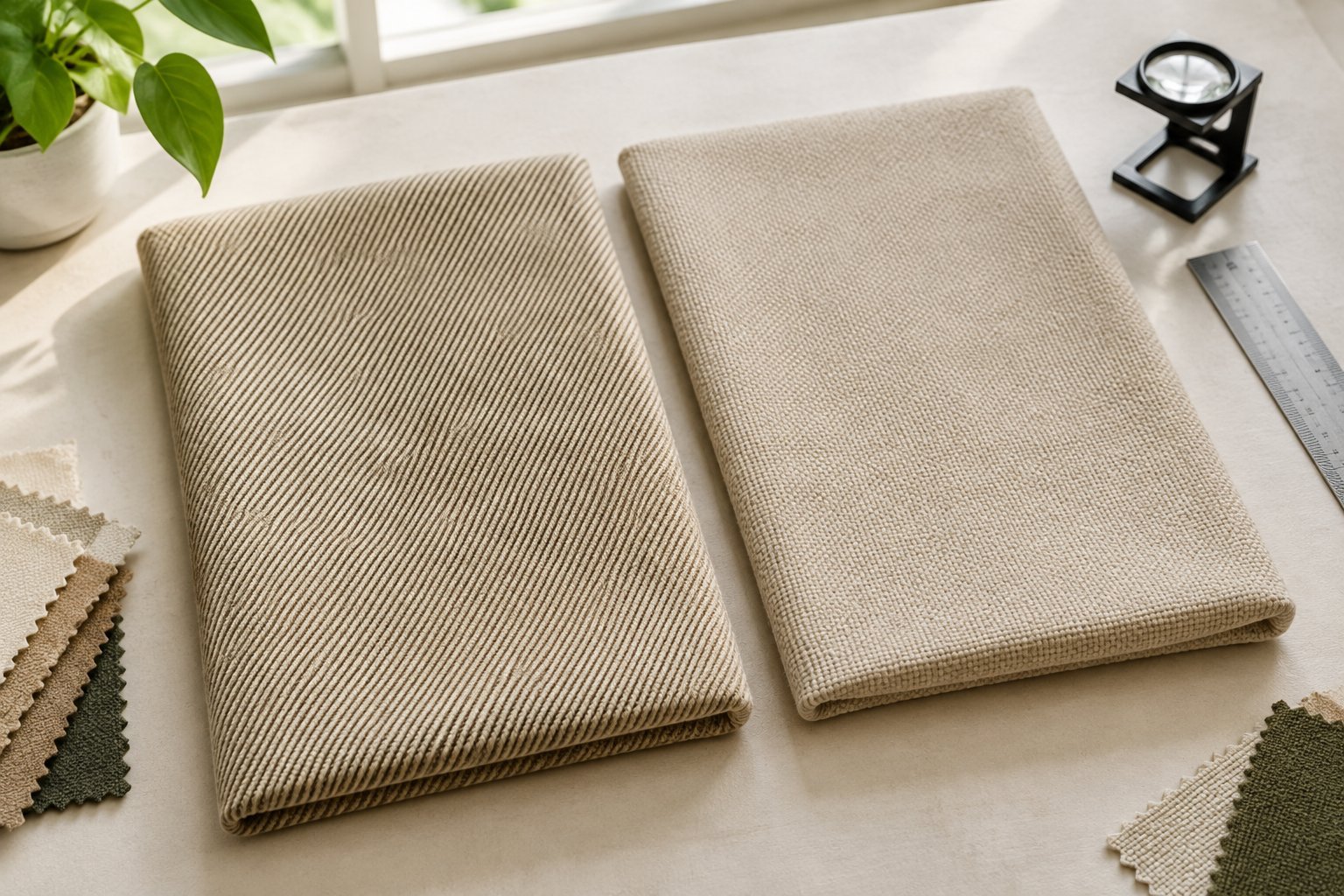
The strongest fabric selection comes from comparing identified finished cloths against the workwear program’s requirements. Twill provides a movement-oriented starting point; canvas provides a structure-oriented starting point.
Purchasing approval should record finished fabric weight and composition alongside the construction details. Matched wear tests, agreed care conditions, and FR fabric quality control documentation give production teams a repeatable basis for acceptance. The approved physical sample should remain available for bulk-lot comparison.
Frequently Asked Questions
The following answers address common specification questions that arise when twill and canvas enter the same workwear shortlist.
Is duck canvas different from regular canvas?
Duck canvas describes a closely woven canvas category associated with a compact surface and substantial body. Commercial terminology overlaps, so buyers should specify yarn arrangement, thread density, and finished weight to establish the exact cloth.
What are the disadvantages of twill fabric for workwear?
Twill fabric with longer floats is susceptible to snagging when exposed yarn sections catch on rough equipment or projections. Uncontrolled shrinkage or skew also creates problems in trouser legs and panel alignment, making finished-fabric stability an important approval check.
Is twill too warm for summer workwear?
Lightweight twill with suitable air permeability is a viable option for summer workwear. Dense construction, heavy finishing, and additional garment layers increase heat burden, so the complete clothing system needs assessment under the intended conditions.
Should industrial cargo pants use twill or canvas?
Twill is a useful starting choice for industrial cargo pants requiring easy bending, while canvas suits a firmer pocket and leg structure. The selected fabric still needs matched abrasion and tear results, followed by evaluation of the assembled pockets and seams.
Are cotton twill and canvas naturally flame-resistant?
Untreated cotton twill and cotton canvas are combustible and require appropriate FR treatment for flame-resistant applications. Procurement approval should use product-specific reports for the finished cloth, with separate evaluation of the completed protective garment.